Welcome Home To Priscy Recipes & Cocktails

Are you interested in?

Food recipes

From main dish to the best intercontinental meal recipes

Cocktails

A blend of liquor, sweetened and unsweetened with other ingredients

One cannot think well, love well, sleep well, if one has not dined well.

—Virginia Wolf

Your Everyday Ingredients

ingeredient icon
Ground Oats

Ground oats are oat groats that have been milled into smaller pieces, creating a coarse flour or meal. This preparation is also known as oatmeal in some regions and comes in different grades, from fine to coarse, each with distinct cooking times and uses, such as porridge, oatcakes, or thickening soups and sauces. Types and grades Fine ground oats: Looks like wholemeal flour and can be used for smooth puddings, as a thickener for sauces and soups, or for making oatcakes. Medium ground oats: The best grade for porridge, providing a slightly thicker, more rustic texture than fine oats. It is also good for oatcakes and as a coating for meats. Coarse ground oats: Often called steel-cut oats or Scottish oatmeal, this requires more soaking or slow cooking and results in a very hearty, textured porridge. How they are made Whole oat groats (the hulled, toasted grain) are ground using stones or a mill. The fineness of the grind determines the grade and cooking time. A blender or food processor can be used to grind rolled oats into oat flour at home. How they are used Thickener: Fine ground oats are excellent for thickening soups, stews, and gravies. Porridge: All grades can be used for porridge, but they produce different textures. Fine oats make a creamy porridge, while coarse oats make a hearty one. Baking: They can be incorporated into baked goods like oatcakes, crêpes, or biscuits. Other uses: They can be added to protein shakes or used as a topping for savory dishes like haggis or stuffing. How to store Because oats have a higher fat content than some other grains, they can go rancid if stored for too long. To maintain freshness, store oats in a tightly covered container in a cool, dry place and buy in smaller quantities.

ingeredient icon
Runner Beans

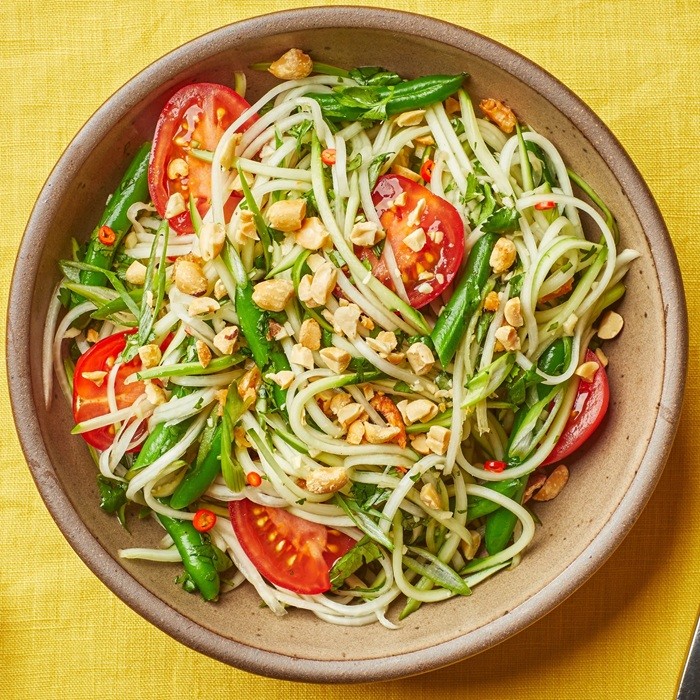
Runner beans are a type of climbing bean native to South America, known for their long, green pods with a robust flavor and slightly rough skin. They are popular in British cuisine and are grown from June to November, though they can also be started indoors earlier. While the pods are the main part consumed, they have edible red or other-colored flowers and contain purple seeds inside when mature. Key characteristics Appearance: Long, flat, green pods with a rough texture. The flowers are often red but can be other colors depending on the variety, such as white.Flavor: Stronger and more robust than green beans.Growth: They are climbing plants that grow on vines, often supported by poles or netting.Edible parts: The green pods can be eaten whole until they become fibrous, which is why they are often sliced before cooking. The attractive flowers can also be eaten as a garnish or in salads.Varieties: There are many varieties, with names like 'Scarlet Runner' and 'White Dutch'. Culinary uses Cooking methods: They can be boiled, steamed, or sautéed.Serving suggestions: They are often served as a traditional British side dish with roasts or can be added to rice or other Asian-style recipes.Harvesting: It is best to harvest them regularly when young to encourage more growth. Growing and care Growing conditions: Runner beans need warmth (ideally (15-25^{circ }C)) and at least six hours of sun per day.Support: Provide a structure for the vines to climb, like a wigwam of canes.Watering: They need consistent moisture, especially during dry periods.Maintenance: "Nipping out" the tops when they reach a certain height can encourage more flowers and crops. 

Browse Ingredient Collection

Get Your Groove On


For That Special Occassion

Tipperary
Tipperary

Glass: Nick and Nora Glass

Ingredients & Measures
  • Irish Whiskey - 2 oz
  • Sweet Vermouth - 1 oz
  • Green Chartreuse - 1/2 oz

Preparation
  • Stir over ice.
  • Strain into chilled glass.
  • Cut a wide swath of orange peel, and express the orange oils over the drink.
  • Discard orange twist.