Side / Turkish
Gathering ingredients and inspiration.
 FROM THE PRISCY KITCHEN
SOMETHING WORTH COOKING
A little inspiration for your table. Gather your ingredients and make this recipe your next kitchen discovery.
GET EVERYTHING READY
Tick off each ingredient as you prepare.
0 of 9 ingredients ready
LET’S MAKE SOMETHING GOOD
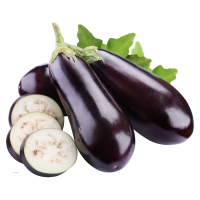
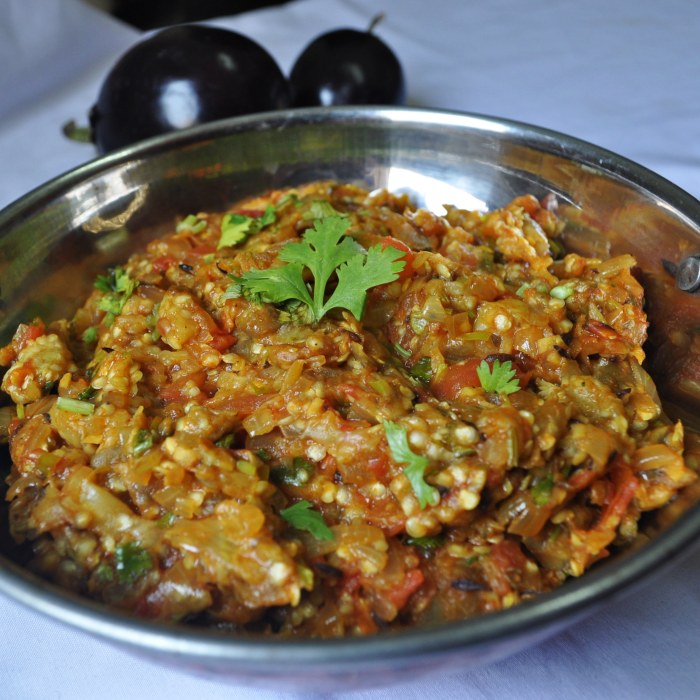
Rinse the baingan (eggplant or aubergine) in water. Pat dry with a kitchen napkin. Apply some oil all over and
keep it for roasting on an open flame. You can also grill the baingan or roast in the oven. But then you won't get
the smoky flavor of the baingan. Keep the eggplant turning after a 2 to 3 minutes on the flame, so that its evenly
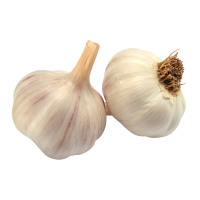
cooked. You could also embed some garlic cloves in the baingan and then roast it.
2. Roast the aubergine till its completely cooked and tender. With a knife check the doneness. The knife should slid
easily in aubergines without any resistance. Remove the baingan and immerse in a bowl of water till it cools
down.
3. You can also do the dhungar technique of infusing charcoal smoky flavor in the baingan. This is an optional step.
Use natural charcoal for this method. Heat a small piece of charcoal on flame till it becomes smoking hot and red.
4. Make small cuts on the baingan with a knife. Place the red hot charcoal in the same plate where the roasted
aubergine is kept. Add a few drops of oil on the charcoal. The charcoal would begin to smoke.
5. As soon as smoke begins to release from the charcoal, cover the entire plate tightly with a large bowl. Allow the
charcoal smoke to get infused for 1 to 2 minutes. The more you do, the more smoky the baingan bharta will
become. I just keep for a minute. Alternatively, you can also do this dhungar method once the baingan bharta is
cooked, just like the way we do for Dal Tadka.
6. Peel the skin from the roasted and smoked eggplant.
7. Chop the cooked eggplant finely or you can even mash it.
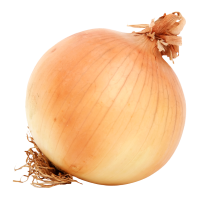
8. In a kadai or pan, heat oil. Then add finely chopped onions and garlic.
9. Saute the onions till translucent. Don't brown them.
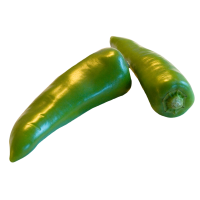
10. Add chopped green chilies and saute for a minute.
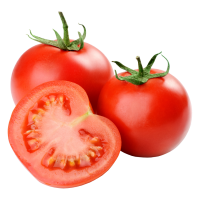
11. Add the chopped tomatoes and mix it well.
12. Bhuno (saute) the tomatoes till the oil starts separating from the mixture.
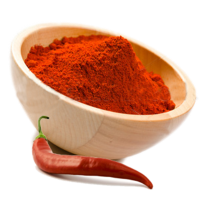
13. Now add the red chili powder. Stir and mix well.
14. Add the chopped cooked baingan.
15. Stir and mix the chopped baingan very well with the oniontomato masala mixture.
16. Season with salt. Stir and saute for some more 4 to 5 minutes more.
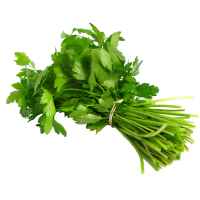
17. Finally stir in the coriander leaves with the baingan bharta or garnish it with them. Serve Baingan Bharta with
phulkas, rotis or chapatis. It goes well even with bread, toasted or grilled bread and plain rice or jeera rice.
Get to know what goes into your recipe. Select an ingredient to explore it.
A LITTLE HELP ALONG THE WAY
A CLOSER LOOK AT YOUR RECIPE
Partial recipe · included ingredients only
The source does not provide a verified serving count. The summary uses original recipe quantities before any batch multiplier, not per serving. Enter your own serving count in the full label to see per-serving amounts.
Calculated automatically from 2 of 9 ingredients. This is an incomplete subtotal, not the full recipe’s nutrition.
Oil assumption: Unspecified cooking oil is estimated as USDA soybean cooking oil. The full measured amount is included; fatty-acid composition can differ with the actual oil type.
Not included: Aubergine, Onion, Tomatoes, Green Chilli, Red Chilli Powder, Coriander Leaves, salt.
Estimated subtotal · included ingredients only
2 of 9 ingredients included. Excluded ingredients are not counted in the amounts or % Daily Values.
Serving count is unknown. Amounts and % Daily Values below apply to the whole original recipe’s included ingredients.
Amount per original recipe
| Amount per original recipe | % Daily Value* |
|---|---|
| Total Fat 20.5 g | 26% |
| Saturated Fat 3.2 g | 16% |
| Trans Fat 0.1 g | — |
| Cholesterol 0 mg | 0% |
| Sodium 3.1 mg | 0% |
| Total Carbohydrate 6 g | 2% |
| Dietary Fiber 0.4 g | 1% |
| Total Sugars 0.2 g | — |
| Includes Added Sugars Unavailable | — |
| Protein 1.1 g | — |
| Vitamin D 0 µg | 0% |
| Calcium 32.6 mg | 3% |
| Iron 0.3 mg | 2% |
| Potassium 72.2 mg | 2% |
A nutrient amount is unavailable when any included ingredient lacks that source value.
* Percent Daily Values use FDA reference values for adults and children aged 4 and over, based on a 2,000 calorie diet. They apply to the amount shown above.
— means no % Daily Value is shown. Trans fat and total sugars have no established Daily Value; protein %DV is omitted because protein-quality data is unavailable. Missing nutrient amounts are not treated as zero.
Daily Value reference: FDA ↗Excluded: No unambiguous USDA portion weight matches this measure.
Estimate uses USDA Eggplant, raw. Quantities refer to edible ingredient weight; brands, varieties and preparation can change the values. USDA source ↗
Excluded: No unambiguous USDA portion weight matches this measure.
Onions are estimated using USDA raw onions. Red and other onion varieties can differ. USDA source ↗
Excluded: No unambiguous USDA portion weight matches this measure.
Estimate uses USDA Tomatoes, red, ripe, raw, year round average. Quantities refer to edible ingredient weight; brands, varieties and preparation can change the values. USDA source ↗
18 g edible ingredient. USDA portion: 1 clove = 3 g.
Raw peeled garlic. A bare count is not assumed to mean cloves. USDA source ↗
Excluded: A count without a size or portion unit needs grams.
Estimate uses USDA Peppers, hot chili, green, raw. Quantities refer to edible ingredient weight; brands, varieties and preparation can change the values. USDA source ↗
Excluded: No quantifiable edible weight or reliable USDA food match is available.
20.4 g edible ingredient. USDA portion: 1 tbsp = 13.6 g.
Unspecified cooking oil is estimated as USDA soybean cooking oil. The full measured amount is included; fatty-acid composition can differ with the actual oil type. USDA source ↗
Excluded: No unambiguous USDA portion weight matches this measure.
Estimate uses USDA Coriander (cilantro) leaves, raw. Quantities refer to edible ingredient weight; brands, varieties and preparation can change the values. USDA source ↗
Excluded: Ranges and descriptive amounts need a gram weight.
Table salt. Coarse, sea, or kosher salt can have different household weights. USDA source ↗
Values use ingredient nutrients per 100 g and food-specific USDA portion weights. Cups, tablespoons and teaspoons use US measures. Pinches, handfuls, “to taste” and unspecified package sizes are excluded. Common counted foods use the stated size or a documented standard USDA portion when a count is supplied; these assumptions are identified above. Other unspecified counts remain excluded.
Assumes included ingredients are retained. Cooking losses, drained liquids, discarded oil, alcohol evaporation and changes in water content are not modeled. Missing nutrient values are shown as unavailable, not zero.
Source: USDA FoodData Central. Data retrieved . These are automatically calculated estimates, not a laboratory analysis.
KEEP THE INSPIRATION GOING
A few more ideas from the kitchen.
Side / Turkish
Side / Croatian
Seafood / Japanese
Miscellaneous / Spanish
Side / Turkish
Vegetarian / Egyptian
PICK UP WHERE YOU LEFT OFF
Your recent discoveries will appear here as you explore.