Side / Turkish
Gathering ingredients and inspiration.
 FROM THE PRISCY KITCHEN
SOMETHING WORTH COOKING
A little inspiration for your table. Gather your ingredients and make this recipe your next kitchen discovery.
GET EVERYTHING READY
Tick off each ingredient as you prepare.
0 of 15 ingredients ready
LET’S MAKE SOMETHING GOOD
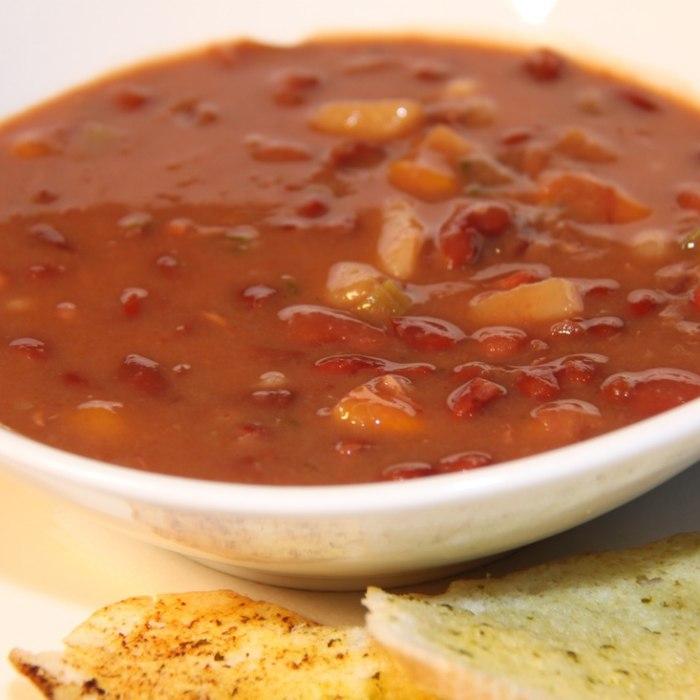
Wash and rinse the dried kidney beans.. then cover with water in a deep bowl. Remember as they soak they will expand to at least triple the size they were originally so add a lot of water to the bowl. Soak them overnight or for at least 2 hrs to make the cooking step go quicker. I tossed out the water they were soaked in after it did the job.
Have your butcher cut the salted pigtail into 2 inch pieces as it will be very difficult to cut with an ordinary kitchen knife. Wash, then place a deep pot with water and bring to a boil. Cook for 20 minutes, then drain + rinse and repeat (boil again in water). The goal is to make the pieces of pig tails tender and to remove most of the salt it was cured in.
Time to start the soup. Place everything in the pot (except the flour and potato), then cover with water and place on a high flame to bring to a boil. As it comes to a boil, skim off any scum/froth at the top and discard. Reduce the heat to a gentle boil and allow it to cook for 1 hr and 15 mins.. basically until the beans are tender and start falling apart.
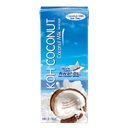
It’s now time to add the potato (and Yams etc if you’re adding it) as well as the coconut milk and continue cooking for 15 minutes.
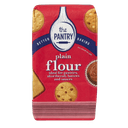
Now is a good time to start making the basic dough for the spinner dumplings. Mix the flour and water (add a pinch of salt if you want) until you have a soft/smooth dough. allow it to rest for 5 minutes, then pinch of a tablespoon at a time and roll between your hands to form a cigarette shape.
Add them to the pot, stir well and continue cooking for another 15 minutes on a rolling boil.
You’ll notice that I didn’t add any salt to the pot as the remaining salt from the salted pigtails will be enough to properly season this dish. However you can taste and adjust accordingly. Lets recap the timing part of things so you’re not confused. Cook the base of the soup for 1 hr and 15 minute or until tender, then add the potatoes and cook for 15 minutes, then add the dumplings and cook for a further 15 minutes. Keep in mind that this soup will thicken quite a bit as it cools.
While this is not a traditional recipe to any one specific island, versions of this soup (sometimes called stewed peas) can be found throughout the Caribbean, Latin America and Africa. A hearty bowl of this soup will surely give you the sleepies (some may call it ethnic fatigue). You can certainly freeze the leftovers and heat it up another day.
Get to know what goes into your recipe. Select an ingredient to explore it.
A LITTLE HELP ALONG THE WAY
A CLOSER LOOK AT YOUR RECIPE
Partial recipe · included ingredients only
The source does not provide a verified serving count. The summary uses original recipe quantities before any batch multiplier, not per serving. Enter your own serving count in the full label to see per-serving amounts.
Calculated automatically from 11 of 15 ingredients. This is an incomplete subtotal, not the full recipe’s nutrition.
Standard USDA sizes assumed for Onion, Red Pepper, Potatoes. Exact portions and food assumptions are listed below.
Not included: Spring Onions, Thyme, Black Pepper, Garlic Clove.
Estimated subtotal · included ingredients only
11 of 15 ingredients included. Excluded ingredients are not counted in the amounts or % Daily Values.
Serving count is unknown. Amounts and % Daily Values below apply to the whole original recipe’s included ingredients.
Amount per original recipe
| Amount per original recipe | % Daily Value* |
|---|---|
| Total Fat 185.6 g | 238% |
| Saturated Fat 98.7 g | 494% |
| Trans Fat Unavailable | — |
| Cholesterol 653.2 mg | 218% |
| Sodium 793.6 mg | 35% |
| Total Carbohydrate 507.4 g | 185% |
| Dietary Fiber Unavailable | — |
| Total Sugars Unavailable | — |
| Includes Added Sugars Unavailable | — |
| Protein 307.8 g | — |
| Vitamin D 0.9 µg | 5% |
| Calcium 1,009.3 mg | 78% |
| Iron 63.2 mg | 351% |
| Potassium 12,949.2 mg | 276% |
A nutrient amount is unavailable when any included ingredient lacks that source value.
* Percent Daily Values use FDA reference values for adults and children aged 4 and over, based on a 2,000 calorie diet. They apply to the amount shown above.
— means no % Daily Value is shown. Trans fat and total sugars have no established Daily Value; protein %DV is omitted because protein-quality data is unavailable. Missing nutrient amounts are not treated as zero.
Daily Value reference: FDA ↗368 g edible ingredient. USDA portion: 1 cup = 184 g.
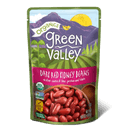
Estimate uses USDA Beans, kidney, all types, mature seeds, raw. Use edible ingredient quantities; variety, preparation and brands can differ. USDA source ↗
72 g edible ingredient. USDA portion: 1 large (7-1/4" to 8-/1/2" long) = 72 g.
Raw edible carrot. USDA source ↗
Excluded: No unambiguous USDA portion weight matches this measure.
Estimate uses USDA Onions, spring or scallions (includes tops and bulb), raw. Quantities refer to edible ingredient weight; brands, varieties and preparation can change the values. USDA source ↗
Excluded: No quantifiable edible weight or reliable USDA food match is available.
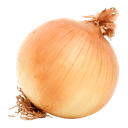
110 g edible ingredient. Standard size assumed: 1 × USDA medium (2-1/2" dia); 1 portion = 110 g.
Onions are estimated using USDA raw onions. Red and other onion varieties can differ. USDA source ↗
Excluded: No unambiguous USDA portion weight matches this measure.
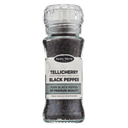
Estimate uses USDA Spices, pepper, black. Quantities refer to edible ingredient weight; brands, varieties and preparation can change the values. USDA source ↗
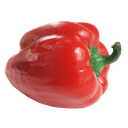
238 g edible ingredient. Standard size assumed: 2 × USDA medium (approx 2-3/4" long, 2-1/2 dia.); 1 portion = 119 g.
Estimate uses USDA Peppers, sweet, red, raw. Quantities refer to edible ingredient weight; brands, varieties and preparation can change the values. USDA source ↗
Excluded: No unambiguous USDA portion weight matches this measure.
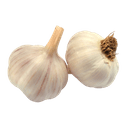
Raw peeled garlic. A bare count is not assumed to mean cloves. USDA source ↗
6 g edible ingredient. USDA portion: 1 tbsp = 6 g.
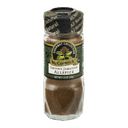
Estimate uses USDA Spices, allspice, ground. Quantities refer to edible ingredient weight; brands, varieties and preparation can change the values. USDA source ↗
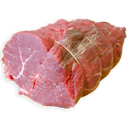
907.185 g edible ingredient. Converted from 2 Lbs using a mass unit.
Generic beef uses USDA raw composite retail cuts with lean and fat. Cut, trimming and fat content can change the estimate substantially. USDA source ↗
2,000 g edible ingredient. USDA portion: 1 liter = 1000 g.
Water and ice contribute no macronutrients. Unspecified ice quantity is excluded. USDA source ↗
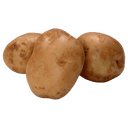
852 g edible ingredient. Standard size assumed: 4 × USDA Potato medium (2-1/4" to 3-1/4" dia); 1 portion = 213 g.
Raw potato with skin. Peeled or cooked potatoes need a different food. USDA source ↗
125 g edible ingredient. USDA portion: 1 cup = 125 g.
Assumes white all-purpose, unenriched wheat flour. Choose a different food for other flour types. USDA source ↗
59.147 g edible ingredient. Converted with US volume units from USDA 1 liter = 1000 g.
Water and ice contribute no macronutrients. Unspecified ice quantity is excluded. USDA source ↗
226 g edible ingredient. USDA portion: 1 cup = 226 g.
Coconut milk is estimated as canned full-fat coconut milk, not a diluted coconut beverage. USDA source ↗
Values use ingredient nutrients per 100 g and food-specific USDA portion weights. Cups, tablespoons and teaspoons use US measures. Pinches, handfuls, “to taste” and unspecified package sizes are excluded. Common counted foods use the stated size or a documented standard USDA portion when a count is supplied; these assumptions are identified above. Other unspecified counts remain excluded.
Assumes included ingredients are retained. Cooking losses, drained liquids, discarded oil, alcohol evaporation and changes in water content are not modeled. Missing nutrient values are shown as unavailable, not zero.
Source: USDA FoodData Central. Data retrieved . These are automatically calculated estimates, not a laboratory analysis.
KEEP THE INSPIRATION GOING
A few more ideas from the kitchen.
Side / Turkish
Side / Croatian
Seafood / Japanese
Miscellaneous / Spanish
Side / Turkish
Vegetarian / Egyptian
PICK UP WHERE YOU LEFT OFF
Your recent discoveries will appear here as you explore.